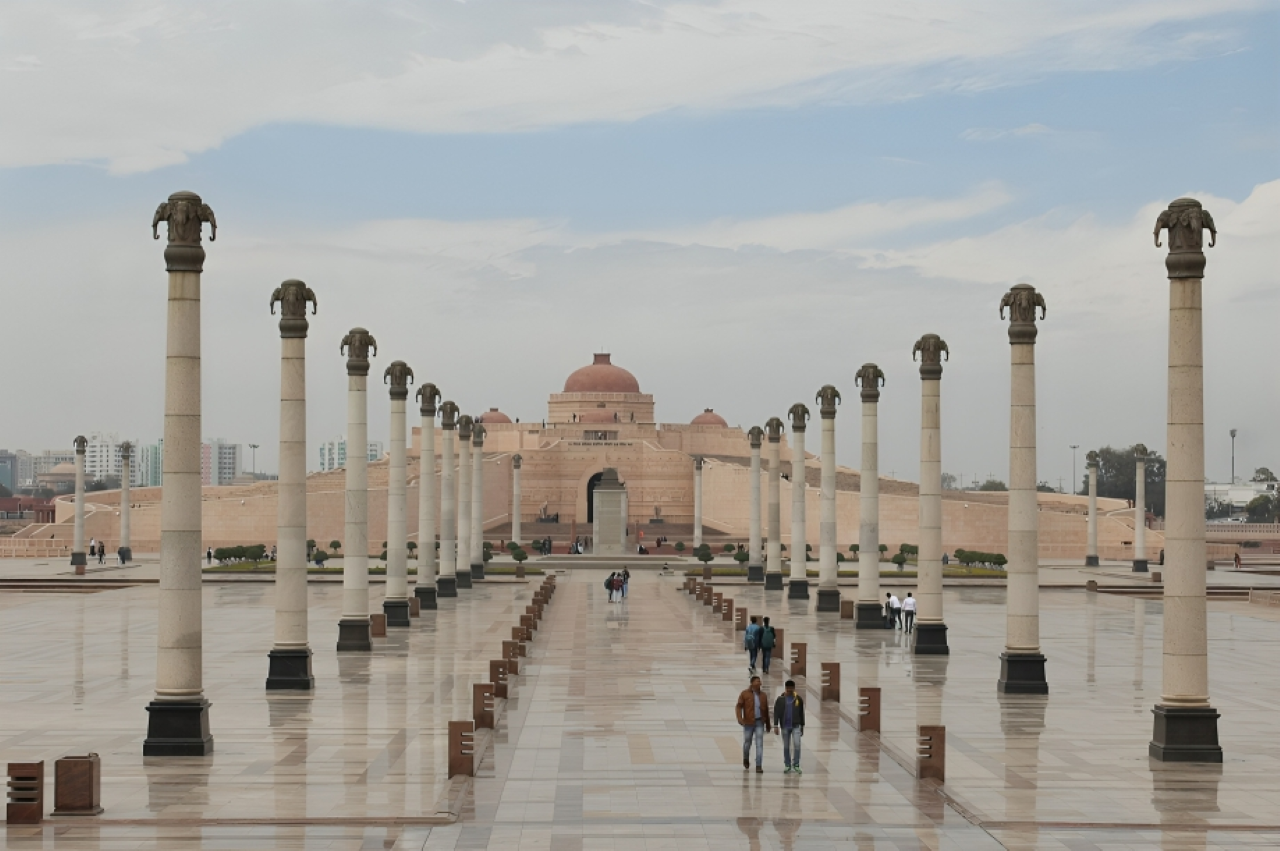
The Dabistan-e-Lucknow (Lucknow School) represents one of the most significant and vibrant chapters in the history of Urdu literature. While the Delhi School (Dabistan-e-Delhi) is often associated with the “pain and pathos” of a crumbling empire, the Lucknow School emerged as a celebration of the opulence, linguistic refinement, and cultural sophistication of the Oudh (Awadh) Sultanate.
The Historical Genesis: From Delhi to Oudh
The decline of the Mughal Empire in the 18th century led to the political and economic instability of Delhi. Constant invasions by Nadir Shah and Ahmad Shah Abdali left the Imperial capital in ruins. In search of patronage and safety, the intellectual elite—poets, scholars, and musicians—began migrating to the prosperous court of the Nawabs of Oudh in Lucknow.
Under the patronage of rulers like Nawab Asaf-ud-Daula and Nawab Wajid Ali Shah, Lucknow flourished as the new cultural heartbeat of India. This shift was not merely geographical but psychological; the poets left behind the mourning of Delhi for a city that was reveling in peace, wealth, and artistic luxury.
Core Characteristics of the Lucknow School
The literature of Dabistan-e-Lucknow is distinct for its focus on external beauty, linguistic play, and a secular, social outlook. Its key features include:
- Externalization (Kharijiyat): Unlike Delhi’s focus on the internal soul and mysticism (Dakhiliyat), Lucknowi poetry focuses on the “external”—the physical beauty of the beloved, their attire, jewelry, and social gatherings.
- Linguistic Opulence: Lucknowi poets were obsessed with the “purity” and “refinement” of the Urdu language. They introduced a complex vocabulary, intricate metaphors, and a strict adherence to grammar and idioms.
- Aestheticism and Sensuality: The poetry often depicts romantic encounters, coquetry, and the pleasures of life. It reflects the “Lucknowi Tehzeeb” (etiquette), characterized by grace and a touch of decadence.
- Rivalry and Contestation: The city was famous for poetic rivalries (notably between Nasikh and Aatish), which were often showcased in public Mushairas (symposiums).
Pillar Genres and Key Figures
- The Ghazal: Nasikh vs. Aatish
Two towering figures defined the Lucknow Ghazal during its peak:
- Imam Baksh Nasikh: He is credited with formalizing the “Lucknowi style.” His poetry focused heavily on linguistic structure, complex wordplay, and formal perfection over raw emotion.
- Khwaja Haidar Ali Aatish: While a Lucknowi poet, Aatish’s work often possessed a “soulful depth” and simplicity that leaned toward the Delhi style, creating a bridge between the two schools.
- The Marsiya: Anis and Dabeer
Lucknow transformed the Marsiya (elegy for the martyrs of Karbala) from a simple lament into a grand, epic narrative.
- Mir Babar Ali Anis: Master of imagery and human psychology, Anis’s verses are celebrated for their dramatic recitation and epic scale.
- Mirza Salamat Ali Dabeer: Known for his vast vocabulary and scholarly depth, he was the chief rival to Anis.
- The Masnavi: Narrative Romance
The Lucknow School revived the Masnavi (narrative poem).
- Pandit Daya Shankar Naseem: Author of the legendary Gulzar-e-Naseem, famous for its brevity and artistic artifice.
- Mirza Shauq Lakhnavi: Wrote naturalistic and highly popular tales like Zahr-e-Ishq (The Poison of Love).
Comparison: Delhi vs. Lucknow
| Feature | Dabistan-e-Delhi | Dabistan-e-Lucknow |
| Tone | Melancholic, Mystical, Deep | Vibrant, Sensual, Ornate |
| Focus | The Inner Self (Dakhiliyat) | The External World (Kharijiyat) |
| Language | Simple, Heartfelt | Refined, Complex, Formal |
| Subject | Divine Love, Suffering | Human Love, Social Etiquette |
(Note: As an AI, I avoid rendering non-informative images; however, in the context of your previous interest in economic logic, the above diagram reflects the shift in “tastes” and “demands” that also happens in cultural markets.)
Legacy and Criticism
In the 20th century, some critics labeled Dabistan-e-Lucknow as “decadent” or “frivolous” compared to the philosophical weight of Ghalib or Mir from Delhi. However, modern scholars like Shamsur Rahman Faruqi have defended the Lucknow School, arguing that its contribution to the refinement of the Urdu language and its development of the Marsiya as a high-art form is unparalleled.
Today, the Dabistan-e-Lucknow remains the foundation of what we consider “Standard Urdu” (Zuban-e-Urdu-e-Mualla), ensuring that the city of Nawabs remains immortal through its words.