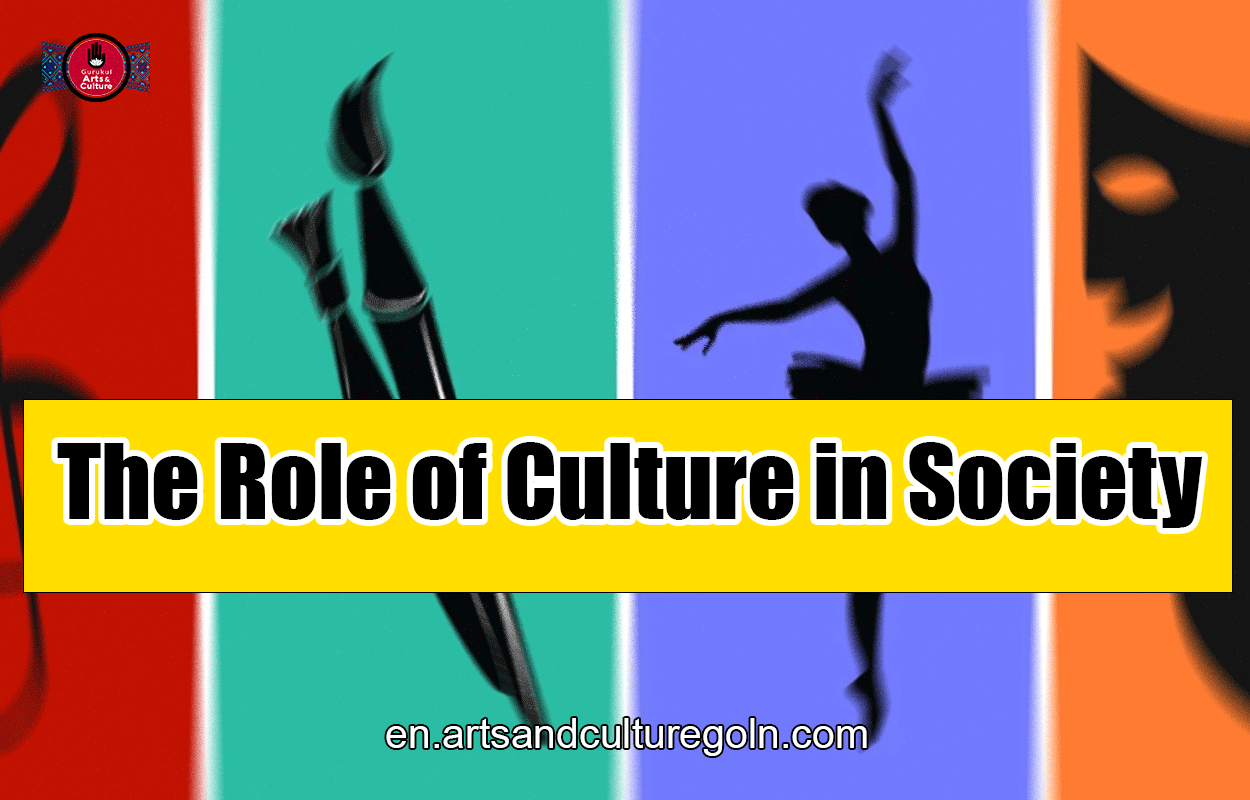
Culture, a complex web of norms, beliefs, customs, arts, and practices, is the lifeblood of every society. It is the fabric that binds us together, providing a shared context in which individuals and communities operate. Culture, in its myriad forms and expressions, plays an integral role in shaping social interactions, individual identities, and societal structures.
The Role of Culture in Society
Defining Culture
Before delving into the role of culture in society, it’s crucial to understand what it entails. Culture encompasses the collective knowledge, belief systems, aesthetic sense, moral norms, laws, customs, and habits acquired by individuals as members of society. It includes language, art, music, dance, social norms, and even culinary traditions, among many other elements.
Culture is a multifaceted concept that permeates various aspects of human life. It’s an overarching term that defines our societal behavior, shared beliefs, and practices. This complex system encompasses language, art, music, social habits, cuisine, traditional rituals, and even economic activities. These aspects collectively shape the identity of a community and influence individual perceptions and behavior.
Culture as Shared Beliefs and Practices:
At its core, culture is about shared beliefs and practices that are transmitted across generations. These can be religious, philosophical, or ethical beliefs that inform societal norms and codes of behavior. Practices can involve traditions, rituals, festivals, and customs that are intrinsic to a community.
Culture and Language:
Language is an essential component of culture. It’s not only a medium of communication but also a reflection of cultural norms, values, and history. Languages can influence how individuals perceive the world, and they encapsulate cultural nuances, humor, and local wisdom.
Art, Music, and Literature:
Culture is often most prominently expressed through art, music, and literature. These forms of expression can embody the values, traditions, and history of a culture. They can convey universal human emotions and experiences while offering insight into a specific cultural context.
Food and Cuisine:
Food habits and culinary traditions are a vital part of culture. The cuisine of a region can be influenced by local produce, historical factors, religious beliefs, and social customs. Food practices, such as communal meals or food festivals, can also contribute to social cohesion within a culture.
Social Structures and Institutions:
Culture influences the organization of society, shaping social structures, roles, and institutions. This could involve the structure of families, gender roles, societal hierarchy, and forms of governance. It can also encompass educational and legal institutions and their operational norms.
Symbols and Signifiers:
Culture includes symbols and signifiers that carry specific meanings within a cultural context. These could be tangible, such as national flags, religious icons, or traditional attire, or they could be intangible, such as rituals, ceremonies, or social etiquette.
Economic Activities:
Economic activities and practices can also be part of a culture. Traditional occupations, market practices, trade customs, and even attitudes towards work and wealth can be culturally determined.
Cultural Evolution and Exchange:
Culture is dynamic and evolving. It changes over time due to historical events, social transformations, technological advancements, and cultural exchange. Cultural exchange can lead to the blending of cultures, creating hybrid cultural forms and practices.
Culture is a collective heritage that provides a sense of identity and continuity. It’s an integral aspect of human experience, influencing our worldview, behavior, and lifestyle. Understanding culture is crucial to appreciating diversity and fostering intercultural dialogue and cooperation. As anthropologist Clifford Geertz puts it, culture is “the fabric of meaning in terms of which human beings interpret their experience and guide their action.

Culture as a Social Glue: Binding Societies Together
Culture, in its simplest form, can be defined as a shared system of values, beliefs, and behaviors that members of a society use to cope with their world and with one another. It represents a collective lens through which individuals interpret and understand their environment. As such, culture acts as a social glue, creating a sense of unity, belonging, and identity among people in a society.
Creating Shared Identity
Culture is instrumental in forging shared identities. It helps define who we are by delineating us from ‘the other.’ Cultural norms and values, expressed through language, religion, customs, and art, provide a sense of collective identity and common understanding. This shared identity promotes social cohesion, enabling people to function together as a community.
For example, national celebrations, like Independence Day in the United States or Bastille Day in France, foster a sense of shared identity and unity. Similarly, cultural traditions, such as Chinese New Year or Diwali in India, create a collective sense of belonging and identity.
Promoting Social Norms and Cohesion
Culture is a significant determinant of social norms and expectations. It establishes the ‘rules of the game,’ dictating appropriate behaviors, attitudes, and interactions within a society. This shared understanding of ‘how things are done’ promotes social order and cohesion, enabling individuals to navigate their social environment effectively.
Cultural norms and values act as a social adhesive, maintaining societal order by outlining acceptable behaviors and promoting a sense of fairness and justice. When individuals abide by these shared norms, they reinforce social bonds and contribute to a more harmonious society.
Facilitating Communication and Understanding
Culture facilitates effective communication and understanding within a society. Shared cultural symbols, language, and expressions provide a common platform for communication, fostering mutual understanding and cooperation. They serve as a societal shorthand, enabling individuals to convey complex ideas, emotions, and experiences efficiently.
This shared cultural ‘language’ not only promotes effective communication but also enhances empathy and understanding. By providing insights into others’ perspectives and experiences, culture fosters mutual respect and tolerance, strengthening social bonds.
Fostering Social Solidarity through Shared Experiences
Culture fosters social solidarity by providing shared experiences through rituals, ceremonies, and collective activities. These communal experiences strengthen social bonds and foster a sense of community.
For instance, collective participation in religious rituals, communal meals, or national celebrations can enhance social unity. Such shared experiences create collective memories, reinforce shared identities, and strengthen the social fabric.
Preserving and Transmitting Cultural Heritage
Culture also serves as a vehicle for preserving and transmitting societal heritage across generations. Through folklore, myths, traditions, and customs, societies pass on their collective wisdom, experiences, and values to future generations. This continuity promotes a sense of belonging and unity, reinforcing the societal glue.
Culture acts as a social glue, creating a sense of unity, belonging, and common identity among people in a society. It defines social norms, facilitates communication, fosters social solidarity, and preserves societal heritage, thereby strengthening the social fabric. In an increasingly diverse and globalized world, understanding and respecting different cultures is essential to foster social harmony and mutual understanding.

Culture and Personal Identity: An Intricate Interplay
Personal identity is shaped by an intricate interplay of various factors, including individual experiences, familial influences, genetic traits, and societal norms. Among these, culture plays a particularly pivotal role. Culture, in its broadest sense, encompasses the shared beliefs, values, customs, behaviors, and artifacts that characterize a group or society. It acts as a blueprint that guides the behavior of individuals within a society, shaping their identities and instilling a sense of belonging and continuity.
Culture as a Determinant of Personal Identity
Culture significantly influences various aspects of personal identity. First and foremost, it impacts our values and beliefs. The ideas and attitudes that are valued in a society inform our sense of what is important, right, and desirable. These culturally-determined values and beliefs, in turn, guide our behavior and decisions, shaping our individual personalities and identities.
Culture also shapes our social identities. The groups we identify with culturally — be it based on nationality, ethnicity, religion, or geographic region — become an essential part of our personal identity. This sense of belonging to a particular cultural group can instill pride, provide a sense of security, and contribute to our self-esteem.
Language is another cultural element that shapes personal identity. As the primary tool for communication and thought, language not only allows individuals to express their ideas and emotions but also shapes their worldview and thought processes. Speaking a particular language or dialect connects us with a specific cultural group and influences our perception of the world, thus playing a crucial role in our identity formation.
Cultural Rituals, Traditions, and Personal Identity
Cultural rituals and traditions also play a vital role in shaping personal identity. Participating in cultural practices, celebrating traditional festivals, and following customs and rituals all contribute to the sense of who we are. These practices provide a sense of continuity with the past, connect us with our cultural roots, and give us a distinctive sense of identity.
Art, literature, music, and cuisine are further aspects of culture that contribute to personal identity. Engaging with these cultural expressions allows individuals to explore, express, and reinforce their unique identities. They offer avenues for individual expression within the context of shared cultural norms and values.
The Role of Culture in Personal Growth and Development
While culture forms an essential part of our identity, it is not a fixed or static influence. As we navigate through life, we interact with different cultures, absorbing new values, practices, and perspectives. This cultural exchange can broaden our horizons, enrich our experiences, and foster personal growth.
Moreover, as societies become more multicultural, individuals often find themselves belonging to multiple cultural groups. This multicultural identity can enrich individuals’ lives, providing them with a broader worldview and enhancing their adaptability and resilience.
Culture is a key determinant of personal identity. It shapes our values, beliefs, social identities, and worldviews. It provides us with a sense of belonging and continuity, informing our understanding of ourselves and our place in the world. As we continue to interact with and navigate through various cultures, our identities evolve, reflecting the dynamic and multifaceted nature of personal identity in a diverse world.
Culture as a Vehicle for Learning
Culture is the shared beliefs, values, customs, behaviors, and artifacts that characterize a group of people. It is a potent and often under-recognized force that shapes learning, behavior, and our understanding of the world. Culture is not static, but a dynamic and evolving entity that plays a critical role in shaping learning environments and processes.
Culture and Cognitive Processes
Culture influences the cognitive processes that underscore learning. It affects how individuals perceive, interpret, and understand the world around them. For instance, researchers have found variations in problem-solving strategies, attention, and memory among people from different cultural backgrounds, signifying that our thinking processes are not universally alike but are influenced by our cultural context.
Culturally Relevant Pedagogy
The recognition of culture’s pivotal role in learning has led to the development of culturally relevant or responsive pedagogy. This teaching approach emphasizes the need to consider students’ cultural backgrounds in all aspects of learning. It seeks to create an inclusive learning environment where diverse cultural experiences and perspectives are valued and integrated into the teaching and learning process.
Culturally relevant pedagogy not only respects and values diversity, but it also views cultural differences as assets and leverages them to facilitate more effective learning. It can boost academic achievement, enhance student engagement, and promote a sense of belonging among learners from diverse backgrounds.
Culture and Knowledge Construction
Culture plays a key role in the construction and transmission of knowledge. It informs what we know, how we come to know it, and how we interpret and apply that knowledge. Culture influences the curriculum content, teaching methods, and learning materials used in education. Recognizing this, educators can leverage cultural knowledge, experiences, and perspectives to make learning more meaningful and relevant for all students.
Culture in Informal Learning
Outside formal educational settings, culture also serves as a vehicle for learning. It’s through cultural practices, traditions, and rituals that essential skills, knowledge, and values are transmitted across generations. Storytelling, for instance, is a traditional cultural activity that serves as an effective tool for teaching and learning in many cultures.
Culture and Social-Emotional Learning
Culture shapes our emotions, values, and social behaviors, playing a significant role in social-emotional learning (SEL). By understanding and acknowledging cultural differences in expressing emotions, forming relationships, or resolving conflicts, educators can more effectively promote students’ social-emotional development.
Culture, as a vehicle for learning, is a rich and dynamic resource that infuses learning with relevance and meaning. By integrating culture into educational practice, we can build more inclusive and engaging learning environments. Whether in a classroom, a community setting, or a global platform, acknowledging and harnessing the power of culture in learning processes is essential to educating global citizens who are empathetic, culturally sensitive, and capable of thriving in an increasingly interconnected world.
Culture and Social Order
Culture is a complex system of knowledge, beliefs, customs, values, and behaviors that are shared among members of a society and that influences their outlooks and decisions. Social order, on the other hand, refers to the organized and patterned relationships that form the society and enable its members to live together in peace and harmony.
Culture and social order are deeply intertwined, as culture often provides the framework upon which social order is built. The norms, values, and beliefs instilled by a culture shape societal expectations and standards, guiding the behavior of its members and fostering social cohesion.
Role of Culture in Shaping Social Order
One of the primary ways culture shapes social order is through the establishment of norms and values. Norms are unwritten rules or expectations about how members of a society should behave in given situations. They provide guidance on acceptable and unacceptable behavior, thereby promoting order and predictability within the society. Values, on the other hand, are deeply-held beliefs about what is important or desirable. They influence people’s attitudes and behaviors and form the basis for societal norms and laws.
For instance, a culture that values respect for elders may have norms that dictate younger individuals should defer to older ones in decision-making. Such norms and values shape interactions among members of the society, promote mutual respect, and maintain harmony.
Culture also influences social order through social institutions like family, education, religion, and government. These institutions uphold and transmit cultural norms and values from one generation to the next, reinforcing societal order.
Impact of Social Order on Culture
Just as culture shapes social order, social order also influences culture. The structure of a society and its systems of law, politics, and economics can impact the development and expression of culture.
For example, in a highly stratified society with strict class boundaries, cultural practices and traditions might develop that reinforce these divisions. On the other hand, in societies with more egalitarian social structures, cultural values of fairness, equality, and inclusivity might be more prominent.
Disruptions to Social Order and Cultural Change
Both culture and social order are dynamic and subject to change. Disruptions to the social order, such as social movements, revolutions, or technological innovations, can lead to cultural changes.
For example, the feminist movement disrupted established social orders and led to shifts in cultural norms and values related to gender roles and expectations. Similarly, the digital revolution has reshaped social interactions and led to the emergence of new cultural norms and practices.
In turn, cultural changes can lead to shifts in social order. When cultural norms and values change, they can reshape societal structures and relationships, leading to a new social order.
Culture and social order are inextricably linked, each influencing and shaping the other. Culture provides the values and norms that guide social interactions and behaviors, thereby establishing the social order. At the same time, the structure and organization of society influence cultural development and expression. Understanding this dynamic interplay is key to understanding the complexity of human societies.
Culture as an Economic Factor
Culture, a complex web of shared values, norms, behaviors, and artistic expressions, is not often immediately associated with economics. Yet, it has significant economic implications and can serve as a driving force behind economic growth and development. Culture’s economic impact can be seen in various sectors including tourism, employment, national identity, innovation, and social cohesion.
Cultural Industries and Employment
Cultural industries refer to sectors of the economy that trade in goods and services resulting from cultural creativity and skill. These include film, music, publishing, design, performing arts, and heritage. These sectors not only generate income but also create employment opportunities. For example, in the United States, the arts contribute over $800 billion a year to the economy, accounting for about 4.5% of GDP, and providing employment for over 5 million people.
Cultural Tourism
Culture plays a significant role in tourism, one of the largest global industries. Tourists are drawn to destinations by their interest in experiencing different cultures, historical landmarks, artistic expressions, and heritage sites. According to the United Nations World Tourism Organization, cultural tourism accounts for around 40% of all global tourism revenues.
This influx of tourists contributes significantly to local and national economies. It boosts local businesses, including hotels, restaurants, transport services, and retail, and the revenue generated can be channeled into the preservation and promotion of cultural sites and practices.
Culture, Innovation, and Economic Growth
Culture is a driver of innovation and economic growth. It fosters creativity, a crucial component of innovation. Diverse cultures can bring together a wide range of perspectives, ideas, and knowledge, promoting problem-solving and the development of innovative goods and services. Countries and cities that are culturally diverse tend to experience higher rates of innovation and economic growth.
Furthermore, culture plays a key role in shaping consumer behavior, influencing purchasing habits, brand perceptions, and loyalty. Understanding these cultural nuances is essential for businesses to succeed in the global market.
Culture and Social Cohesion
While the connection between culture and social cohesion may not seem directly economic, social cohesion (or lack thereof) has significant economic implications. A harmonious society, where cultural diversity is respected and valued, fosters a more stable environment for economic activity. It encourages cooperation, reduces social conflict, and promotes inclusive economic growth. Conversely, societal tensions and conflicts can disrupt economic activities and hinder development.
Cultural Capital
Culture contributes to the “cultural capital” of a nation or region, which can attract investment and spur economic development. Cities rich in culture can attract businesses looking for a dynamic and vibrant environment in which to establish their operations. Cultural capital can also attract talent, with highly skilled individuals drawn to locations offering a high cultural quality of life.
Culture is a powerful economic factor, influencing employment, tourism, innovation, consumer behavior, social cohesion, and investment. Recognizing and leveraging this economic potential of culture requires thoughtful cultural policies and investment in cultural industries. By preserving and promoting their unique cultural heritage while embracing cultural diversity, societies can drive economic growth and development in a sustainable and inclusive manner.
Culture and Innovation: An Intricate Interplay
Culture and innovation have a deeply interconnected relationship. Culture, as a collection of values, beliefs, customs, and practices of a group or society, shapes the way we perceive the world and approach problems. Simultaneously, innovation, with its focus on introducing new ideas, improving processes, and bringing about change, often reflects and influences cultural practices. The interplay between culture and innovation is dynamic and continually evolving, with each shaping and being shaped by the other.
Culture’s Influence on Innovation
Culture significantly influences innovation in various ways. For one, cultural values and norms can impact the willingness to take risks, which is fundamental to innovation. Cultures that encourage curiosity, experimentation, and risk-taking are more likely to foster innovative thinking. Conversely, cultures that prioritize tradition and conformity may stifle innovation.
Furthermore, culture impacts how people work together, which is crucial in innovation. Cultures that promote collaboration, diversity, and inclusion can spark more innovative ideas as different perspectives lead to more creative problem-solving. By fostering an environment that respects diversity and encourages the free exchange of ideas, cultures can cultivate a breeding ground for innovation.
Innovation’s Influence on Culture
While culture can influence innovation, the reverse is also true. Innovations, particularly technological ones, can profoundly impact cultures. Consider the influence of the internet and social media on our culture. These innovations have revolutionized communication, influencing our language, values, and social norms. They’ve enabled global connectivity, promoting cultural exchange and broadening our cultural understanding.
Moreover, innovation can also challenge cultural norms and beliefs. Innovations can question established ways of doing things, prompting societies to reevaluate their practices. For instance, sustainable innovations challenge cultures of consumerism and waste, pushing for a shift towards more sustainable practices.
The Intersection of Culture and Innovation
The intersection of culture and innovation is also evident in fields like design and art. In these domains, cultural influences often inspire innovative work. At the same time, innovative designs and artworks can influence cultural aesthetics and trends.
Moreover, cultural heritage can be a source of innovation. Drawing on traditional knowledge and practices can lead to unique innovations. For instance, many sustainable design principles echo indigenous knowledge systems, highlighting the innovative potential of cultural heritage.
In the corporate world, the concept of ‘innovation culture’ has gained traction. It refers to fostering a culture that encourages innovative thinking and risk-taking within an organization. Companies with strong cultures of innovation tend to be more adaptive and successful in the ever-changing business landscape.
The relationship between culture and innovation is complex and reciprocal. They are constantly influencing each other, creating a dynamic interplay that shapes societies. Understanding this relationship can provide valuable insights into how we can foster innovation and navigate cultural change in the 21st century. Recognizing the role of culture in driving or hindering innovation can guide policy-making, business strategies, and social initiatives. Similarly, acknowledging the cultural implications of innovations can help us navigate the social changes they bring about. The dance between culture and innovation will continue to shape our world, making it an intriguing area for exploration and understanding.
The role of culture in society is multilayered and profound. It shapes individual identities, social structures, and societal norms. It acts as a social glue, a learning vehicle, and an economic driver. As societies become increasingly multicultural, understanding and appreciating diverse cultures become even more crucial in promoting social harmony and progress. The power of culture in shaping our world underscores the importance of preserving cultural heritage and promoting cultural diversity.
See more: