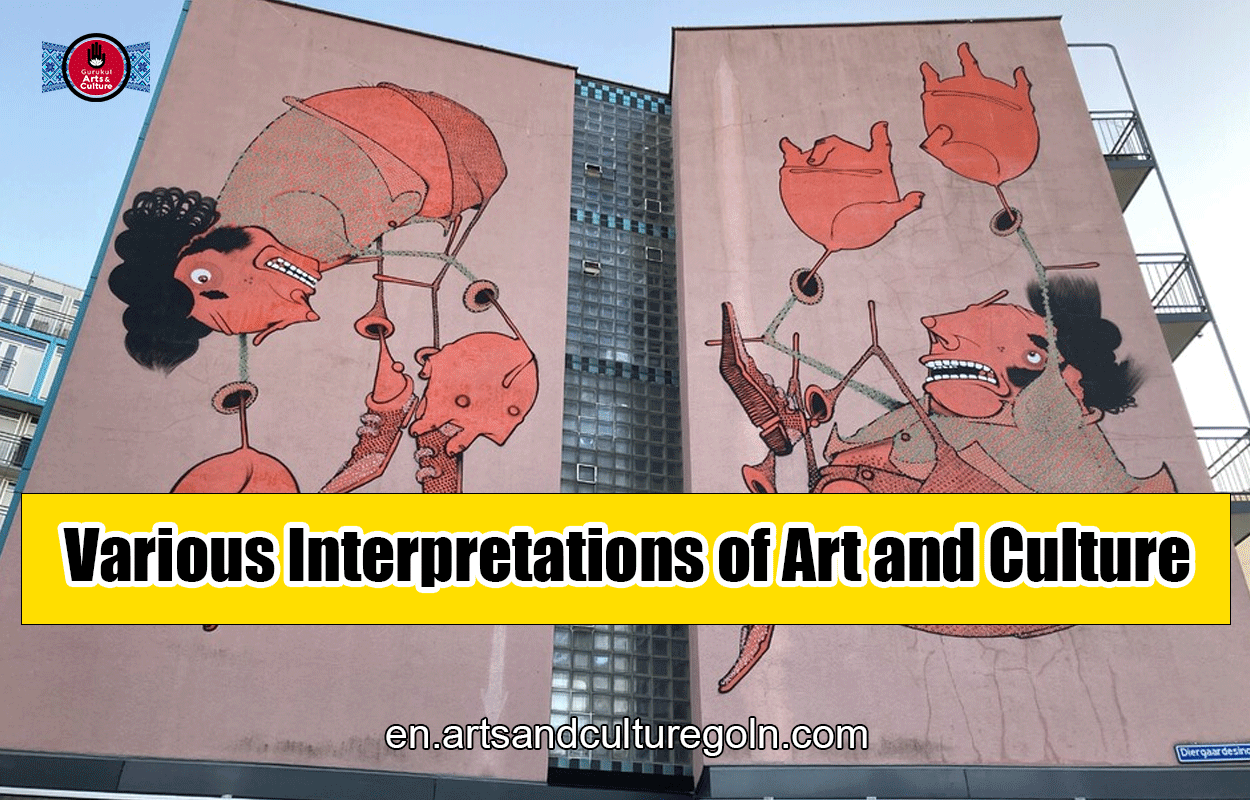
Art and culture are two intertwined elements of society that have evolved alongside humanity for thousands of years. The beauty of art and culture lies in their universality and their variability: they are universal because everywhere there are humans, there is art and culture; they are variable because each culture’s art is a unique reflection of its values, history, and world view. To interpret art and culture requires a deep understanding of both the tangible and the intangible, the seen and the unseen, and the spoken and the unspoken. This article delves into the multifaceted interpretations of art and culture, shedding light on their significance, evolution, and impact on society.
Interpretations of Art and Culture

Understanding Art and Culture
Art is a diverse range of human activities involving creative or imaginative thought to produce visual, auditory, or performance artifacts expressing the artist’s ideas, emotions, or inner world. Art can manifest in many forms, including painting, sculpture, literature, music, dance, theater, film, architecture, and more. The concept of “art” is deeply rooted in human culture.
Culture, on the other hand, is a term with various interpretations itself. It encompasses the social behaviors, norms, knowledge, beliefs, arts, laws, customs, capabilities, and habits of a society or a group of people. It is the total of the inherited and innate ideas, attitudes, and material traits shared by a group that influences their behavior and outlook towards life.

Interpretations of Art
Art interpretation is a form of critical analysis and understanding an artist’s work. It involves understanding the techniques employed, the themes, the historical and cultural context, and the artist’s intentions. However, it goes beyond the academic or theoretical analysis of artwork; it is also about how the artwork resonates with the viewer on an individual level, making it a deeply personal and subjective experience.
Different cultures interpret art through their unique cultural lenses. For example, Western art traditionally places a strong emphasis on realism and perspective, tracing its roots back to ancient Greece and Rome. It usually centers on themes such as humanism, individualism, and rationalism. Eastern art, such as traditional Chinese painting, values harmony, balance, and a sense of the ethereal. It is less focused on realistic depictions and more on capturing the spirit of the subject.
Furthermore, the interpretation of art has changed significantly over time, reflecting the evolution of society. Art’s interpretation in the modern and postmodern era has increasingly valued originality, abstraction, and challenging societal norms. Artists such as Pablo Picasso and Salvador Dali have pushed the boundaries of traditional art interpretation with their Cubist and Surrealist creations.

Interpretations of Culture
Culture is a complex construct that forms the backbone of society, guiding social norms, behaviors, and values. The interpretation of culture involves understanding these norms and values within their specific context.
Anthropologists, sociologists, and historians often engage in cultural interpretation, seeking to understand and explain why people behave as they do, how cultural norms evolve, and what these norms mean to the people who follow them. Cultural interpretation can focus on elements such as language, religion, social structure, lifestyle, food, and art.
Importantly, culture is not static, but dynamic and continually evolving, shaped by social, political, and environmental influences. For instance, globalization has significantly impacted the way cultures are interpreted today, with a fusion of Eastern and Western cultural elements seen worldwide. The interpretations of culture also evolve as societies become more diverse and interconnected.
The Intersection of Art and Culture
Art and culture are inextricably linked, as art is both a product of and a contributor to culture. The art created within a culture reflects its values, beliefs, and narratives, offering insights into its collective consciousness. Conversely, art can also challenge and shape culture, pushing boundaries, sparking dialogue, and causing societal shifts.
Art’s interpretations are thus deeply tied to cultural contexts. The cultural background of both the artist and the viewer can significantly influence the understanding of a piece of art. A Japanese Noh play, an Italian opera, or an Indigenous Australian dot painting may all elicit different responses depending on the cultural knowledge and sensitivity of the viewer.
The beauty of art and culture lies in their endless interpretations. They are mirrors reflecting both individual and collective human experiences across time and space. To interpret art and culture is to embark on a journey of understanding the diversity and depth of human experiences, transcending boundaries, and connecting with our shared humanity. It enriches our perspectives and enables us to appreciate the beauty and complexity of our world. Despite their variability, art and culture together weave a rich tapestry of human civilization, narrating an ever-evolving story of creativity, imagination, and the enduring human spirit.
See more: