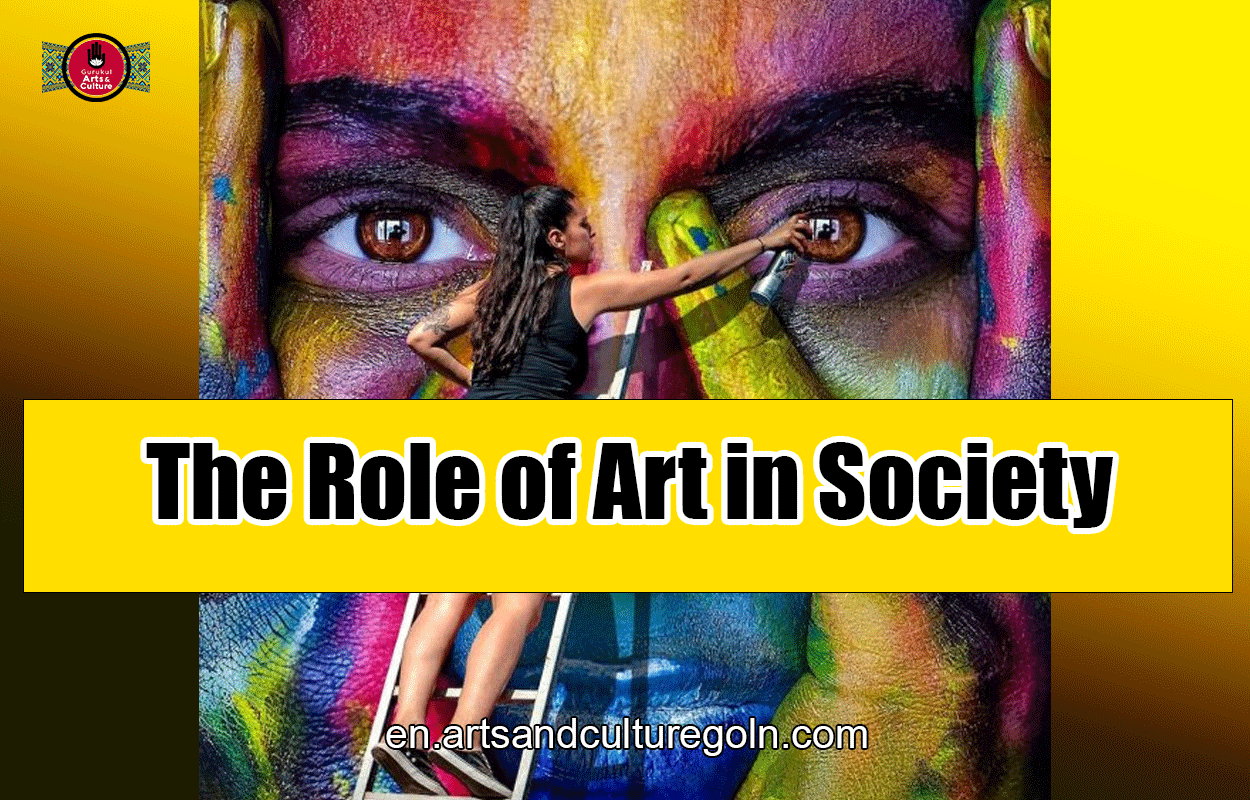
Art is an integral part of human society. As a mirror of culture and a reflection of societal values, art has a profound and pervasive influence on people’s lives. In its diverse forms—painting, literature, music, dance, sculpture, and many others—it shapes our perceptions, influences our emotions, and stimulates thought and dialogue.
The Role of Art in Society

Art as a Medium of Expression
Art, in its many forms, has long been used as a medium of expression. This means that art becomes a platform through which individuals communicate their personal emotions, ideas, and experiences to the world.
From ancient cave paintings to contemporary digital art, human beings have used visual, auditory, and performance arts to express themselves. These expressions might be personal, reflecting an artist’s inner feelings, thoughts, or experiences. Or they might be social, addressing larger societal themes, norms, and narratives. In any case, art serves as a conduit through which artists convey their inner world, sharing it with their audience.
Visual Arts
In visual arts such as painting, sculpture, and photography, artists utilize color, form, texture, and composition to communicate their ideas and emotions. For instance, Vincent van Gogh’s intense use of color and dramatic brush strokes in his painting “The Starry Night” convey his emotional turmoil and his deep fascination with the mysteries of the night sky. The distorted figures and vibrant colors in Pablo Picasso’s “Guernica” express his outrage at the horrors of war.
Literature and Poetry
In literature and poetry, writers employ words, characters, plot, and other literary devices to express their thoughts and feelings. Emily Dickinson’s reclusive life was reflected in her introspective and deeply personal poems. James Baldwin, a gay Black man in mid-20th century America, used his novels, essays, and plays to explore and critique social and psychological pressures on marginalized communities.
Music and Dance
In music and dance, composers, musicians, and dancers use rhythm, melody, lyrics, and movement to express a wide range of emotions and ideas. Beethoven’s “Symphony No. 9” communicates a powerful sense of joy and unity. The dance form of ballet uses delicate and precise movements to tell stories, convey emotions, and depict characters.
Film and Theatre
In film and theatre, directors, actors, and screenwriters use a combination of visual imagery, dialogue, acting, and music to bring stories to life and express a multitude of human experiences and perspectives. A film like “Schindler’s List” uses these elements to express the horror of the Holocaust, while a play like “Death of a Salesman” uses them to explore the disillusionment of the American Dream.
Art transcends cultural and linguistic barriers, allowing people from different cultures, countries, and time periods to understand and connect with each other’s experiences and perspectives. It gives a voice to the voiceless, allowing marginalized and oppressed groups to express their unique experiences and critique societal norms.
In conclusion, art as a medium of expression allows us to communicate the incommunicable, to express the ineffable, and to connect on a deep, emotional level. It allows us to share our human experience, in all its beauty, pain, complexity, and universality.

Art as a Reflection of Society
Art holds up a mirror to society. It reflects the zeitgeist of its time, encapsulating the values, struggles, and triumphs of the periods in which it is created. Every piece of art is a historical and cultural artifact, carrying within it the echoes of the societal context in which it was produced.
Historically, art has been used as a tool to document and communicate the realities of the time. Ancient cave paintings, for instance, offer insights into prehistoric life, depicting scenes of hunting, gathering, and spiritual rituals. Egyptian hieroglyphics and monumental structures such as the pyramids, demonstrate societal structures, religious beliefs, and aesthetic values of that civilization.
Art in the Middle Ages, particularly religious artwork, reflected the central role of the Church in societal life, with its rich iconography and symbolic elements echoing spiritual teachings and the dominance of religion. The shift during the Renaissance towards more secular and humanistic themes marked the societal shift away from purely religious themes towards a renewed interest in the physical world, science, and the human experience.
During periods of social upheaval and change, art has often been a potent commentary on societal events. The disillusionment following World War I, for instance, gave rise to Dadaism, an art movement that rejected logic and reason in favor of nonsense and irrationality, reflecting the sense of absurdity and despair felt by many.
Moreover, social realist art of the 19th and 20th centuries directly addressed the plight of the working class, revealing the harsh realities of poverty, inequality, and social injustice. It challenged the status quo and compelled society to face its own inequities.
Contemporary art continues to mirror societal issues, with artists engaging with topics such as climate change, racial inequality, gender identity, and digital technology. Consider the works of Ai Weiwei, which challenge the Chinese government’s policies, or the murals of Banksy, which satirize contemporary political and social issues.
Art also reflects societal transformations in perception and thought. Impressionism, with its emphasis on capturing the fleeting effects of light and color, marked a departure from the rigid rules of academic painting, mirroring the changing perceptions of reality in the late 19th century. Similarly, the fragmented forms and multiple perspectives of Cubism echo the shifting, relative understanding of time and space brought about by the advent of modern physics.
It’s important to note, however, that while art reflects society, it is not a simple, direct reflection. The artist’s individual perspective, artistic conventions, and the influence of other works of art all come into play. Art doesn’t merely copy reality—it interprets it, comments on it, and adds to it. Even so, in its capacity to reflect society, art helps us understand who we are, where we come from, and the issues that affect our lives. It helps us see society from different perspectives, broadening our understanding and enriching our human experience.

Art as an Agent of Change
Art has long been acknowledged as a potent catalyst for change. In its various forms, it has the power to inspire, provoke thought, and encourage dialogue, making it a powerful tool for social and political transformation. Art holds a mirror to society, reflecting its beauty and flaws alike, but more than that, it often pushes boundaries, challenging us to question the world as we know it and imagine alternatives.
Challenging the Status Quo
One of the foremost ways in which art acts as an agent of change is by challenging the status quo. Artists often push boundaries and break conventions, encouraging viewers to question their preconceptions. By presenting novel perspectives or highlighting overlooked aspects of society, art can provoke individuals to see the world in a different light and inspire them to challenge entrenched norms and beliefs. For example, feminist artists like Frida Kahlo and Judy Chicago have used their art to challenge traditional gender roles and highlight women’s experiences, contributing to broader conversations about gender equality.
Political Activism and Social Commentary
Art can also be a powerful platform for political activism and social commentary. Artists have long used their work to voice dissent, highlight injustice, and call for change. Street art and murals, for instance, have been effective tools for political expression and protest. The murals of the Civil Rights era, the street art during the Arab Spring, or Banksy’s graffiti are all examples of how art can be used to communicate powerful political messages and galvanize social change.
Promoting Empathy and Understanding
Art has the unique ability to communicate complex emotional states and human experiences, fostering empathy and understanding among diverse individuals and communities. It allows us to see the world through someone else’s eyes, promoting a sense of shared humanity and encouraging more empathetic, inclusive societies. Art that explores issues of race, identity, sexuality, or mental health, for instance, can promote awareness and understanding, challenge stereotypes, and contribute to social inclusion and diversity.
Inspiring Community Engagement
Art projects, especially those involving community participation, can help foster community engagement, solidarity, and social cohesion. Public art projects and community arts programs can help empower communities, giving voice to marginalized groups and fostering a sense of shared identity and purpose. They can also engage people in dialogues about community issues, leading to collective problem-solving and social innovation.
Environmental Awareness and Conservation
Art can play a significant role in raising awareness about environmental issues and advocating for conservation. Artists can use their work to draw attention to the beauty and fragility of the natural world, prompt reflection on our relationship with the environment, and inspire action on environmental issues. From striking images of melting glaciers to installations made from recycled materials, art can be a powerful medium for environmental activism.
In conclusion, as an agent of change, art is not merely a passive reflection of society but a powerful force for social transformation. By challenging perceptions, fostering empathy, and provoking dialogue, art can inspire individuals and communities to envision and work towards a more inclusive, equitable, and sustainable world.
Art for Personal and Collective Identity
Art has long been recognized as a powerful tool for expressing one’s unique self and fostering a sense of identity. Individual artists, through their distinct styles and thematic choices, reflect their personal experiences, beliefs, and worldviews. By creating art, they explore their identity, convey their inner selves, and position themselves in relation to their social, cultural, and historical contexts. A piece of art, therefore, can be a deeply personal expression of the self, encapsulating the artist’s perception of their place in the world.
On a larger scale, art also contributes significantly to shaping collective identity. It acts as a cohesive force, binding communities, societies, and nations together through shared cultural experiences and heritage. Artistic works often depict shared customs, traditions, histories, and collective memories, reinforcing a sense of belonging among people within a group. For example, national and regional art forms, from the Noh theater of Japan to the mural traditions of Mexico, play an integral role in fostering a shared cultural identity.
Art’s contribution to collective identity is particularly potent in the context of indigenous and marginalized communities. Here, art is frequently used as a means of cultural preservation and resistance. Indigenous art often encompasses rich traditions, myths, and beliefs of these communities, serving as a bridge between the past and the present, tradition and modernity. Through the creation and sharing of their art, indigenous communities can affirm and preserve their cultural identities in the face of external pressures and changes.
Moreover, art has the power to unify diverse populations. In multicultural societies, art—whether in the form of public installations, community-led murals, or multicultural festivals—can foster mutual understanding and respect among different cultural groups. It can celebrate diversity while simultaneously emphasizing shared human experiences, promoting unity in diversity.
Art’s role in shaping identity can also be seen in the therapeutic context. Art therapy enables individuals to use the creative process to explore their feelings, reconcile emotional conflicts, manage behavior, reduce stress, and increase self-esteem and self-awareness. In this context, the act of creating art can lead to personal insight and self-discovery, promoting a stronger sense of self-identity.
Art serves as a powerful tool for both personal and collective identity formation. It provides a platform for individual self-expression while simultaneously uniting people through shared cultural expressions and experiences. As such, art plays a critical role in shaping our understanding of ourselves and our relationships with others, influencing how we navigate our place in the world.
Art for Emotional Catharsis
Art, in its many forms, has long been recognized as a powerful tool for emotional catharsis. It provides individuals with a safe, expressive platform to explore and articulate feelings that might otherwise be difficult to express.
Creating Art for Catharsis
Artistic creation can often be a deeply personal and emotional experience. The act of painting, sculpting, composing music, writing, or engaging in any other creative endeavor allows individuals to tap into their emotions and channel them into something tangible. This process can be particularly therapeutic for those dealing with difficult circumstances or emotions.
For instance, someone experiencing grief might turn to painting to express their sorrow, creating a visual representation of their feelings. This can provide a sense of relief, as it helps to externalize and objectify the emotional turmoil within, thereby reducing its intensity.
The abstract nature of art also allows for the expression of complex, ambiguous emotions that are not easily verbalized. The colors, shapes, and forms used in visual art, the rhythm and melody in music, the metaphors in poetry – all provide means to convey nuanced emotions and experiences.
Experiencing Art for Catharsis
Art is not just cathartic for the creator but also for the observer. Engaging with art can evoke strong emotional responses and offer a form of release. Viewing a powerful painting, reading a moving piece of literature, or hearing a stirring piece of music can trigger emotional reactions, leading to a sense of catharsis.
Art has the unique ability to resonate with people’s personal experiences and emotions. It can validate individual feelings and experiences, providing comfort in the knowledge that others have felt similarly. It can also offer a new perspective, facilitating understanding and acceptance of one’s own emotions.
Art Therapy
The cathartic potential of art has led to the establishment of art therapy as a distinct therapeutic approach. Art therapy uses the process of creating art to help individuals explore emotions, develop self-awareness, manage stress, and improve self-esteem.
Under the guidance of a trained therapist, individuals are encouraged to create art that reflects their emotional state. This process helps them to externalize their feelings, making them easier to understand and manage. It can be particularly beneficial for those who find it difficult to express their feelings verbally, such as children or individuals dealing with trauma.
In conclusion, art serves as a powerful tool for emotional catharsis, offering both creators and viewers a means of exploring, expressing, and managing emotions. Whether through creating or experiencing art, or through therapeutic practices like art therapy, art allows for emotional release and can offer comfort, validation, and personal insight.
Art as Economic Driver
Art’s role as an economic driver is an aspect that is often overlooked, but it is nevertheless significant. In fact, the arts contribute in several substantial ways to local, national, and global economies.
Art Market:
The most direct way art drives the economy is through the art market. Comprised of artists, galleries, dealers, auction houses, and collectors, the art market can generate substantial revenue. Whether it’s the sale of a multimillion-dollar painting at a prestigious auction, or a local artist selling handmade crafts at a weekend market, each transaction contributes to the economic flow. Internationally, the value of the global art market was estimated to be over $64 billion in 2019.
Job Creation:
The arts sector creates a myriad of job opportunities. Beyond the artists themselves, there are countless roles tied to the arts industry, including gallery staff, art handlers, curators, museum educators, and restorers, among others. Additionally, art-related events and festivals require event planners, security personnel, food vendors, and more, further expanding the industry’s employment reach.
Tourism:
Art is a significant driver of tourism. Tourists flock to cities around the world to visit renowned museums, art galleries, and public art installations, contributing to the local economy through the purchasing of tickets, souvenirs, food, accommodation, and transportation. Cities such as Paris, New York, and Florence owe much of their tourism revenue to their rich artistic offerings.
Urban Regeneration:
Art can also play a role in urban regeneration and development. Deteriorating and underutilized urban areas can be transformed into vibrant art districts, attracting visitors, stimulating local business, and raising property values. A great example of this is the transformation of New York’s SoHo district in the 1970s and 80s, where artists moved into neglected warehouses and turned them into studios and galleries, sparking a revitalization of the area.
Cultural Industries:
The impact of the arts extends to broader cultural industries, including film, design, fashion, and digital media. These industries often intersect with the arts, relying on creative talent for their success and contributing significantly to the economy.
Education:
Art schools and educational programs also generate economic activity. From tuition fees to the creation of teaching jobs and the provision of supplies, art education is a crucial part of the arts economy.
Economic impact of the arts is broad and multifaceted. While the true value of art lies in its capacity to inspire, provoke, and connect us, its economic contributions are a powerful testament to the practical role that art plays in society.
The multifaceted role of art in society cannot be understated. It is a mirror and catalyst of social change, a medium of communication and expression, a reflection of cultural and historical contexts, and a driver of economic activity. It adds color to our lives, sparks our imagination, challenges our perceptions, and connects us with our shared humanity. As society continues to evolve, art will undoubtedly continue to play an indispensable role, illuminating the human experience in all its complexity.
See more: